Mostrando entradas con la etiqueta Spanish language. Mostrar todas las entradas

martes, 1 de noviembre de 2016

As Expected

I´ve often wondered when my kids´ mastery of Spanish would surpass my own.

It´s becoming clear that we are crossing that threshold.  As I´ve been joking for years, it seems to be that I really DO speak Spanish like a second-grader.  Except now it´s not a joke.


Up until the other day, when Clara brought home this bit of homework, I had no idea that solo (Spanish for only) could--or sometimes should--be written with an accent mark. 

Thank goodness the teacher sent home a worksheet that had this grammar quirk well defined!

It turns out that when solo is used as an adjective (solo is describing the noun) it does not need an accent mark.  

Sólo requires an accent mark when it´s used as an adverb (sólo describes the verb).  After wading through 10 examples, I got pretty confident, and I´m pretty sure that both Clara and I now know the difference.  

But I´ve got my work cut out for me from here on out!


lunes, 21 de diciembre de 2015

The Worst Word

Yesterday, Clara came up to me and declared, "my doll says a bad word."

Confident that we never acquired a doll with a potty mouth, I assured her that she must have misunderstood.  But Clara was convinced that the doll was providing a bad example.

"Want to know what she says?"

Curious what terrible word this piece of plastic was teaching my child, I agreed.  Clara drew close, whispering in my ear, in an attempt to expose as few people as possible to this doll´s poor manners.

"Stupid face."

Initially, I couldn´t believe that any toy company would sell a doll that would say "stupid face".  However, on listening to the culprit, I had to admit that Clara was right.


Oh, that made-in-China quality control!

However, the doll´s potty mouth was more offensive to Clara´s ears than mine on at least two levels:

1)  Within the four-to-eight-year-old age range, isn´t "stupid face" just about the biggest slam there is?  One might as well go all out and call someone "poopy face".

2)  Not only is my daughter six, but she´s a Mexican six-year-old.  Among Mexicans--of any age--"stupid" is the ultimate forbidden word.  There are swear words, and then there is stupid.

Now, even in English, it is pretty harsh to call another person stupid.  However, in other contexts, we throw the word around all the time.

The airplane is late?  Stupid plane.

The refrigerator doesn´t work?  Stupid refrigerator.

Any of those phrases are absolutely unacceptable in Spanish (at least, Mexican Spanish).  Therefore, under no circumstances should the S-word be applied to a person.

Or else Clara´s doll might call one a "stupid face", too.


domingo, 11 de mayo de 2014

Me Speak Spanish!

Cookie Monster has come home to roost.  Again.

Honestly, this has nothing to do with a Sesame Street obsession, on the part of me or my children.

But, six months after one child stopped talking like Cookie Monster, the next one started up.

Joey:  Me take bath no.  [I´m not going to take a bath.]
          Me hit you no.      [I didn´t hit you.]

Et cetera.  His syntax is wildly out of place.  Instead of referring to himself as a noun, he´s gramatically an object.  Always.

But he does get his point across.  At least to those of us who converse with him on a regular basis.

And this is what we all struggle with when we learn another language.  Watching my children learn both English and Spanish, and reflecting on my own experiences of learning Spanish, I´m convinced that there are stages and phases that we simply can not skip over.  We can not pick up a Learn-Whatever-Language-in-10-Easy-Steps book and walk away a fluent speaker.

Taking it all in.
Like my friend Belinda, who attends the International Church´s Bible study in English.  She needs the English practice.  She struggles with English.  Most of the time at Bible study, she spends the entire two hours just listening, trying to follow along.  Just like infants for the first two years of life.  Before kids have the physical capabilities to utter a word, they´re spending quite a bit of their energies figuring out what we´re saying.  (And don´t forget that they can hear in the womb--so don´t talk to your infants like they can´t understand you.  They just might.  And if it pisses me off when people pass me off, thinking I don´t understand Spanish, I´m willing to bet a baby feels just the same.  Respect your babies´ intelligence, peeps!  OK, end of tangent.)

And bless Belinda´s heart, she keeps coming.  And she keeps listening.  And one day, she´s going to work up the nerve and SAY something in English--because let me tell you, this woman has plenty to say!  (In Spanish, at least.)  ;)

But oh-so-frustratingly, her English is most likely going to come out sounding something like Joey´s.  He´s certainly improving with leaps and bounds and Belinda will, too.  Heck, up until this fall, Clara was still talking like Cookie Monster in Spanish.  She would literally say, ¨Me quiere una galleta.¨  [Me want a cookie.]  So when the speech teacher came to evaluate her, they were probably thinking, ¨Dear sweet heavens--why does this four-and-a-half-year-old talk like a two-year-old?¨

Up until her enrollment in school, she had limited practice at speaking Spanish, so she needed a few months of Spanish immersion for three hours a day before she could sound like a typical preschooler.  She now does.  She speech teacher is ready to release her.  However, Clara is in love with her speech teacher, so maybe I´ll teach her how to lisp so she can keep going to see her ¨Spanish¨ teacher.

This reminds me of my study-abroad semester.  In one of my classes, we were asked to write a biography of a figure from the Mexican Revolution.  It had to be about two to five pages long.  In Spanish, of course.  I was a twenty-year-old college sophomore.  Clearly, I was pretty well-versed in the process of writing, and I had gotten pretty good at it.  Two to five pages?  Please, I could do that ten minutes before class.
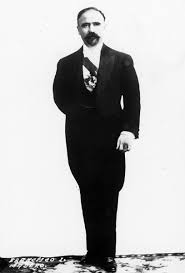
Fortunately, I did not put the paper off that long.  It turned out to be one of the most difficult papers I had to write in my whole college career.  Of course, in English I could analyze and synthesize, wax poetic and make all kinds of interesting points about the life and times of Francisco I. Madero.  However, in Spanish, I couldn´t reason much beyond fifth grade level. All of a sudden, it became very difficult not to plagiarize.  I couldn´t get beyond the barest facts of his life.  ¨He was born on . . . He was from . . . He did this . . . Then he did that . . . blah, blah, blah¨--for two to five pages!  Did I mention this was one of the hardest essays I ever had to write?  And it turned out to be the worst I wrote (since elementary school).  Comparatively speaking.

As an elementary education major, it was a fascinating experience to feel like I was inside a fifth grader´s brain again.  But as a twenty-year-old, it was frustrating.  Well, shoot--maybe that´s a huge part of the reason why fifth and sixth grade were so difficult for so many of us.

But the point it, I did it.  I persevered.  Just like Clara persevered with her Cookie Monster Spanish and is now talking like her peers.  I´ll take a leaf out of her book and continue to persevere with Spanish and someday--just maybe--I´ll talk like my peers, too.  (A girl can dream.)

And, for those of you who are not learning a new language, have patience with those language-learners who cross your path.  Learning a language, at any stage of life, is a long, slow process.  It´s a good deal more frustrating for those in the process of learning the language than it is for those trying to communicate with said language learner.  Have patience with us.  We´re trying.

We´ll get there someday.  

martes, 17 de abril de 2012

Word

Just learned my new favorite Spanglish word.

And this time I didn't make it up or learn it from another gringo--it's standard around here! I saw it on a billboard a few days after hearing it.

The other day, I walked past a table where someone was selling cupcakes. They asked me if I wanted a quequito. Of course, my English-driven brain heard "cake-ito".

But no, if you want a cupcake in northern Mexico, a quequito it is.

Yet another joy of living awfully close to the border!

viernes, 18 de diciembre de 2009

Hubiera

I'm trying to talk with Clara more in Spanish because, despite living in Mexico, we've realized that she just doesn't hear enough Spanish. In one of my conversations with her, I stumbled across my new favorite word.

"Clara--si hubiera hecho esto . . . "

[thought to myself] "Ooo--'hubiera'--that's pretty cool!"

It's cool on two fronts:

1) it's pronounced Ooo-bee-air-ah. What an awesome string of vowels! How pretty is that?

2) I feel smarter using this word, as it's a verb in the past subjunctive form. Now, if you've ever learned a foreign language for any length of time (at least a European foreign language other than English), the subjunctive form of verbs gives students apoplectic fits--provided that student speaks English as their first language. Why? English doesn't have a subjunctive tense (unless we add the word "may" before another verb). So we get all bent out of shape and spend years trying how to figure out when the right time is to use this verb form.

And I've got it down!

But, at the same time, the word has its downside. After all, it means "would have", and is generally proceeded by "if".

"If I would have . . . "

I hate to say that too much, because I don't want to regret things I've done or failed to do (even little things, like not doing the laundry until it was too rainy, like yesterday). What's done is done. Or not done, as the case may be. Why be looking back and second guessing myself?

Fortunately, I don't say it all that often.

And it is a pretty word.

miércoles, 2 de diciembre de 2009

"Umm . . . what's your name?"

I'm changing my name.

Jill is nearly impossible to pronounce/understand in Spanish (unless the person I'm talking to has an excellent command of English). First of all, the letter J in Spanish is pronounced like an English H. The sound for the English short "i" doesn't exist at all, and the double l is pronounced like a y.

"Como se llama?"

"Jill."

"Como?"

"Jill."

"Uhh . . . [very long pause] . . . Jeee?"

"That's it!" I reward ANY attempt at pronouncing my name with a huge smile and a confidence-boosting, "Yes! Exactly! That's me!"

I even fear that the non-pronounceability of my name has costed me a friend. Way back in March, I met a woman at the park who had just moved to Saltillo that week, didn't know anyone apart from her husband and daughter (who is just 4 months older than mine), and seemed to be just as excited to meet me as I was to meet her. We exchanged phone numbers with promises to call each other the following week.

I tried to call her. But her number was a cell phone. All my past experiences with cell phones in Mexico has taught me that 044 or 045 needs to be dialed before the number. But I wasn't having any luck getting through to Marisela. Finally, after a month of trying her without any success, I just dialed her number like it was a regular long-distance number. Bingo. I left a message. But was she still using that cell phone with her number from Tampico?

She may have tried to call me. But if she was unsure about how to pronounce my name, would she have called? I can only imagine having a piece of paper with a super-short unpronouncable name on it. "Yeah, hi. I'm calling for . . . uhh . . . are you that woman I met in the park the other day?"

Had it been me, I would have waited to receive the call.

Which never happened. Boo.

During my first days at NPH, I hung out with the chicas quite a bit and remember their initial confusion about how to say my name. One day, we were watching young Jim Hawkins' adventures on Treasure Planet. Lupita Munoz turned to me with a light in her eyes, indicative that something just "clicked" for her. "Jim!" she exclaimed, connecting my name to that of Mr. Hawkins'. Oh, so close. But I'll take what I can get.

After way too long, I wised up. When leaving my name at stores to place an order, I am now Michelle. The cashiers at least understand it, despite the fact that my name is stored in the Farmacia Guadalajara's computer as MICHEL DUULAS. When introducing myself at my Bible study, I offered the name Michelle first, but siting that it was my middle name.

"What's your first name?"

They decided they could handle Jill. But now, three months after meeting these women, Jill has somehow morphed into Gina.

I'll take it.

domingo, 6 de septiembre de 2009

Bees in the Blender

Mario's mom and sister are visiting, so we've been speaking a lot of Spanish. As Mago (Mario's mom) was washing dishes, I heard her say that she found an "aspa" in the blender. I believe that I heard the word for nest, too. I couldn't figure out how wasps had made a nest in the blender. And, oh, was I disgusted!

Mario couldn't understand my reaction, as he told me that his mom had found our missing blender blades in the blender. "Aspa" means blender blades--not wasp (avispa), like I thought I heard.

Whew--no wasps in the blender, and now I can make chunk-free baby food! Oh, the joys of not catching everything!

miércoles, 13 de mayo de 2009

10 Years

Ten years ago today I thought I was saying goodbye forever to Mario and Mexico. To date, I think that was still the saddest day of my life. But, to quote While You Were Sleeping, "life doesn't always turn out the way you plan." Thank goodness for that!

Like most people who have experienced the study abroad semester, I'll stand in line with the rest of them to say that it was hands down the best semester of my college career. Not grade wise, certainly. But I learned more in that one semester, about myself and the world in general, than is normally possible to experience in four months. (Finding my future husband was an additional perk.) While I'm waxing reminiscent, I'd like to send a huge thanks to anyone who joined me on that path during the spring of 1999, particularly Aubrie, Kelli, Liz, Nilaja, Smiljana, and especially Sally and Enrique. It's an experience that has changed my life.

Normal semesters abroad involve language classes and maybe a few nearby trips. Thanks to Sally and Enrique, our semester involved an extended, guided trip every other weekend. Often, we probably got more history thrown at us than we would have chosen on our own, but I was always grateful, as we left knowledgable about the places we visited. And oh, the places we went! Puebla, Mexico City, Oaxaca, Veracruz, Morelos, pyramids out the wazoo . . . I think we saw more of the country than the average Mexican ever sees, let alone the average study abroad student. It was well worth all the "pena" I endured, trying to make myself understood on a day-to-day basis. (While I was wrapped up learning about the world at large, learning Spanish was not one of my big priorities. Oops.)

If reading this you think, "man, I always wanted to study abroad, but never could." It's not too late! Language schools all over the world cater to adults (and families) for just a week at a time, up to months at a time. The average travel guide usually provides language school ads. Furthermore, full-time volunteer opportunities abound if you're willing to take a year-long leave of absence from work (ooo--find yourself unemployed during this financial crisis? What are you waiting for?). I recommend starting with the Catholic Network for Volunteer Service www.cnvs.org (not just for Catholics or even Christians . . . there are opportunities for your average agnostic or atheist, too. They're just a little harder to find here). Just click on the Response directory and have fun searching! And if you've always dreamed of working with orphans in Latin America, I recommend Nuestros Pequenos Hermanos www.nph.org. Two tough, but rewarding years of my life were spent in their Mexico house.

OK, I'll get down off my soapbox now. If you know me, you knew that volunteer speech was coming. Now it's over. Whew.