Mostrando entradas con la etiqueta Veracruz. Mostrar todas las entradas

domingo, 2 de abril de 2017

Destination: Veracruz


The port of Veracruz (otherwise known as Veracruz, Veracruz) is one of my favorite cities in Mexico. When I lived in Puebla, we drove the five hours to Veracruz about once a month, leaving after Mario got off of work and arriving about midnight.  We´d first stop at El Gran Café La Parroquia and have a café con leche under the stars while watching the cargo ships in the port.

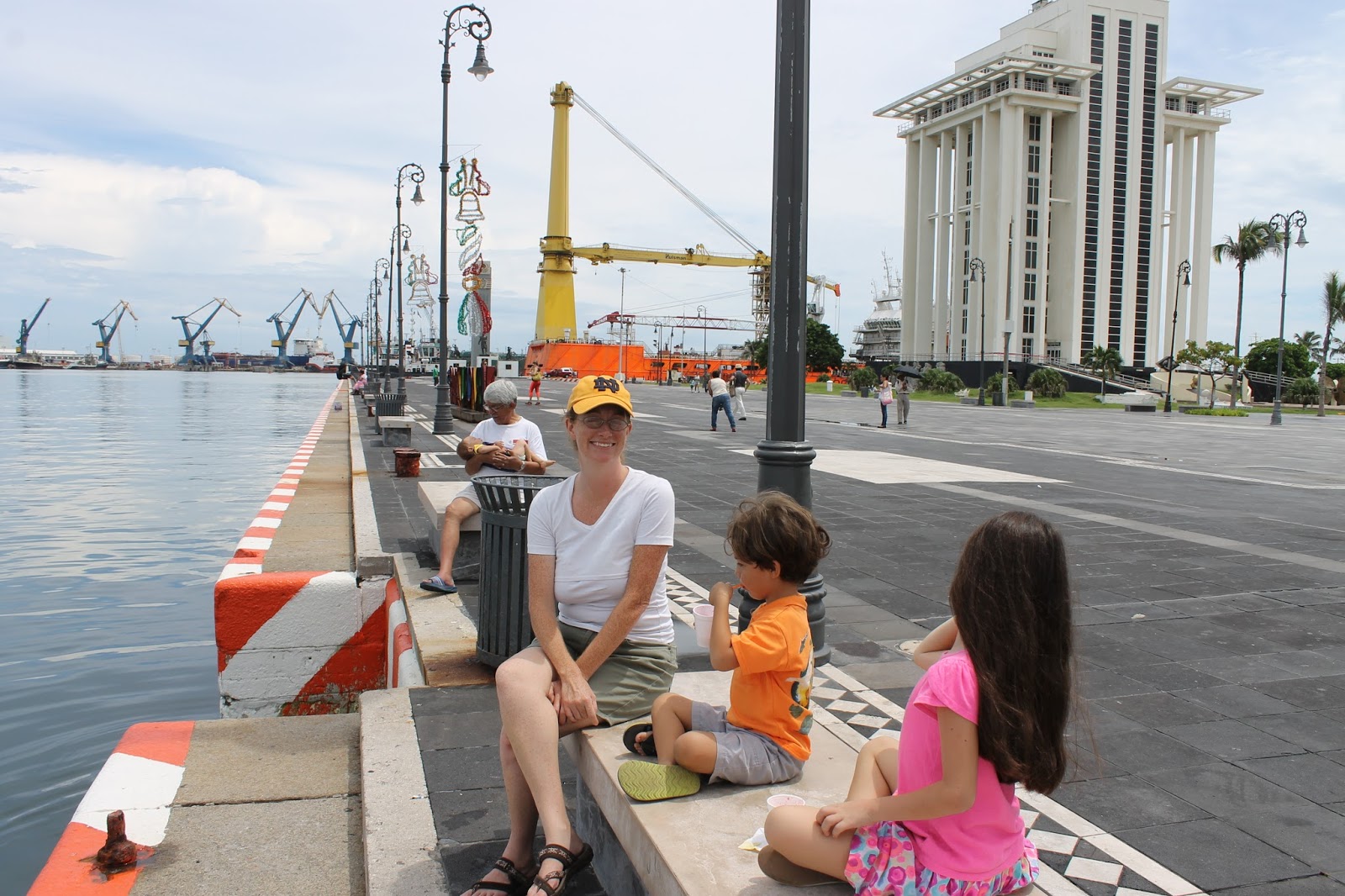
Taking the kids this time, the malecón (boardwalk) is still the best place to enjoy Veracruz.  The main reasons for this:  nieves and café con leche at the Parroquia are both very near the malecón.


El Gran Café La Parroquía


Café con leche at El Gran Café La Parroquia is a bit on an institution in Veracruz.  One waiter brings a tall glass, filled with just a shot of espresso.  Then they ring for the milk man, who comes to the table armed with a kettle of steaming milk.  He then tops off the glass.  Mexicans generally prefer their coffee insanely sweet.  So don´t be shy--go ahead and add those three generous spoonfuls of sugar, and enjoy the Parroquia´s café con leche as it was meant to be enjoyed.


Nieves

Nieves (sherbets) are Veracruz´s other taste sensation.  Decent sherbet is easy to find throughout the country, but the jarochos take their sherbet to a whole other level.  Furthermore, they have flavors that aren´t found readily elsewhere.  The nieve stands are happy to combine flavors in one cup, and that really is the way to go.  Try a coconut and passionfruit combination, mamey and strawberry, or vanilla and lime.  Trust me, vanilla sherbet is not at all related to that ho-hum vanilla ice cream!  My mother fondly remembers a peanut sherbet that she had in Veracruz 15 years ago--these sherbets are that memorable!


The road leading to the malecón from the zocalo is dotted with nieve stores.  Most have employees out on the sidewalk, trying to attract customers, belting out, "¡Güero, güera--nieve, nieve, NIEVE!"  At first that´s a little overwhelming, but it´s another of those decidedly Veracruzian touches.  May they never change.


Beach


The beach at Boca del Río
Being on the Gulf coast, stopping at the beach was a must.  There are decent beaches north of the city, others within walking distance of the malecón, and others by large hotels on the south end of the city.  Being blessed with a nearly endless supply of gorgeous beaches, most Mexicans consider the beaches near Veracruz to be substandard.  However, after visiting other beaches, on returning to Veracruz this year, I´ve reaffirmed my opinion that Veracruz´s beaches are still my favorites.  The sand might not be as pristine as the Yucatán, the waves are certainly calmer than on the Pacific (thank goodness), and in Veracruz there´s the ever-present cargo ships on the horizon.  But I think that´s precisely what I like about Veracruz.  Beachgoers don´t have to drive very far (if at all) from a busy, thriving city.  That, and the fact that crabs pop their heads out of the sand and scurry off sideways, fleeing curious children.  As ubiquitous as picture books make them, real, live crabs are hard to find on beaches today!

History


San Juan de Ulúa
Veracruz is one of the oldest cities in Mexico.  In fact, they´re gearing up to celebrate their 500th anniversary in 2019--they´re already selling commemorative T-shirts on the malecón!  But throughout history, Veracruz has been a great foothold for invaders coming into the country.  The Spanish established the port here, as they began their march to Mexico City, on their way to destroy the Aztec empire.  The French used the same port when they invaded in 1862, as the the did US when they invaded Mexico in 1914.  Pirates were also attracted to Veracruz.  So early on in Veracruz´s history, the fort of San Juan de Ulúa was built.  It no longer serves as a fort (or a prision), but is now a museum, giving visitors a glimpse into Veracruz´s history.  

Veracruz is a great place to visit, offering a little something for everyone--a modern city with a well-preserved colonial past, surrounded by accessible beaches, and filled with delicious restaurants and sights for visitors.  On the zócalo, it´s likely visitors will catch groups of older couples dancing danzón.  The cathedral´s stations of the cross are worth a view--they capture the passion of Christ with pictures of only Christ´s hands--impactful in its simplicity.  And for families, Veracruz boasts Mexico´s largest aquarium!  There´s something for everyone.

¡Viva Veracruz!


The Juárez Lighthouse

The Port Authority

Watching ships load while enjoying nieve.  

The road from the zócalo to the malecón.

jueves, 8 de octubre de 2009

Fiestas Patrias

Contrary to popular opinion in the United States, Mexico does NOT celebrate Independence Day on the fifth of May. (In fact, most Mexicans do not celebrate Cinco de Mayo at all . . . but more on that in May.) Mexico's Independence Day (and all Central American countries' Independence Days) is on September 16th.

We planned on celebrating Independence Day with Mario's extended family in Coatzacoalcos, Veracruz (again, at the very bottom of the Gulf of Mexico). Many people go out to join a "Fiesta Patria", or patriotic party, sometime in mid-September. Fiestas Patrias involve people dressing in clothes that are representative of a certain region of the country (or in green, red, and white if traditional clothes are not available). Then they get together and eat a lot of traditional Mexican food, sing mariachi and other traditional songs, drink a lot of traditional tequila, and dance.

As Mario's "uncle" Ramon turned 5o on September 15, his wife threw him a surprise birthday party, cleverly disguised as a Fiesta Patria. Somehow she was able to keep the surprise a secret, and Ramon was accordingly overwhelmed when he waltzed into the banquet hall, surrounded by 60 of his nearest and dearest friends and family.

In every town throughout Mexico, at midnight on September 15th (or 16th), the mayor of the town stands on the balcony of the town hall and shouts, "Viva Mexico!" The throng of people gathered in the square then echo "Viva Mexico!" a number of times, commemorating the shout that Father Hidalgo, a priest and father of Mexico's independence movement, gave to kick off Mexico's independence from Spain 199 years ago.

However, we were enjoying ourselves in the banquet hall and were clearly not going to join the rest of Coatzacoalcos in the town square. Therefore, at midnight, Ramon's elderly mother made her way to the balcony in the banquet hall, recited a patriotic poem, and then gave a spirited, "Viva Mexico!"

This was one of the most touching ways I've celebrated the 16th of September.

jueves, 1 de octubre de 2009

Destination: Achotal, Veracruz

The first stop on our whirlwind blitz through Mexico was Achotal, Veracruz--home of Octaviano Saure, Mario's 102-year-old grandfather (plus various aunts and uncles). This town is so tiny that it's not on the map. But for reference's sake, it's roughly an hour west of Coatzacoalcos, on the southern "tip" of the Gulf of Mexico.

The first thing that I noticed about this town that sets itself apart from other towns in Mexico is that all the houses have porches--a feature that is missing from most Mexican houses. But, due to the heat, thank goodness these porches exist. All we did for the two days we were in Achotal was porch-sit. And really, it was great.

For years, I've been told about the river that runs near the house. Given the heat, I was nearly delirious for a chance to swim in it. However, when Mario and I went to investigate it, it had risen higher than Mario had ever seen it and swallowed up the beaches that we could use to safely enter it. Therefore, swimming was ruled a bad idea. Nuts.

I entertained myself with the flora and fauna. Chickens strolled freely through the yard (and streets), and iguanas hopped from tree to tree. Having never seen an iguana in its natural habitat before, I was fascinated (and took way too many pictures).

Mario's grandfather was a cattle rancher and Mario's cousin runs the ranch now. Mario's grandfather and his aunt Evelia live in the wood house that Mario's mom grew up in, while his uncle, cousin and family live next door. Although they've always done well financially, the house is as simple as can be--particularly recently, as the running water is temporarily out of order. (Causing Mario to once again grumble that the country is regressing, instead of progressing.) For me, the lack of running water reminded me of camping, so, needless to say, I loved it.

While their living condition is very, very simple, Mario's grandpa and aunt receive abundant help from their immediate relatives. (More than they feel necessary, I believe.) With exception of the running water problem (I don't know exactly why it was shut off or what it will take to get it back on), they lack for nothing. Would that I could say the same for so many other senior citizens here and everywhere.